- 01
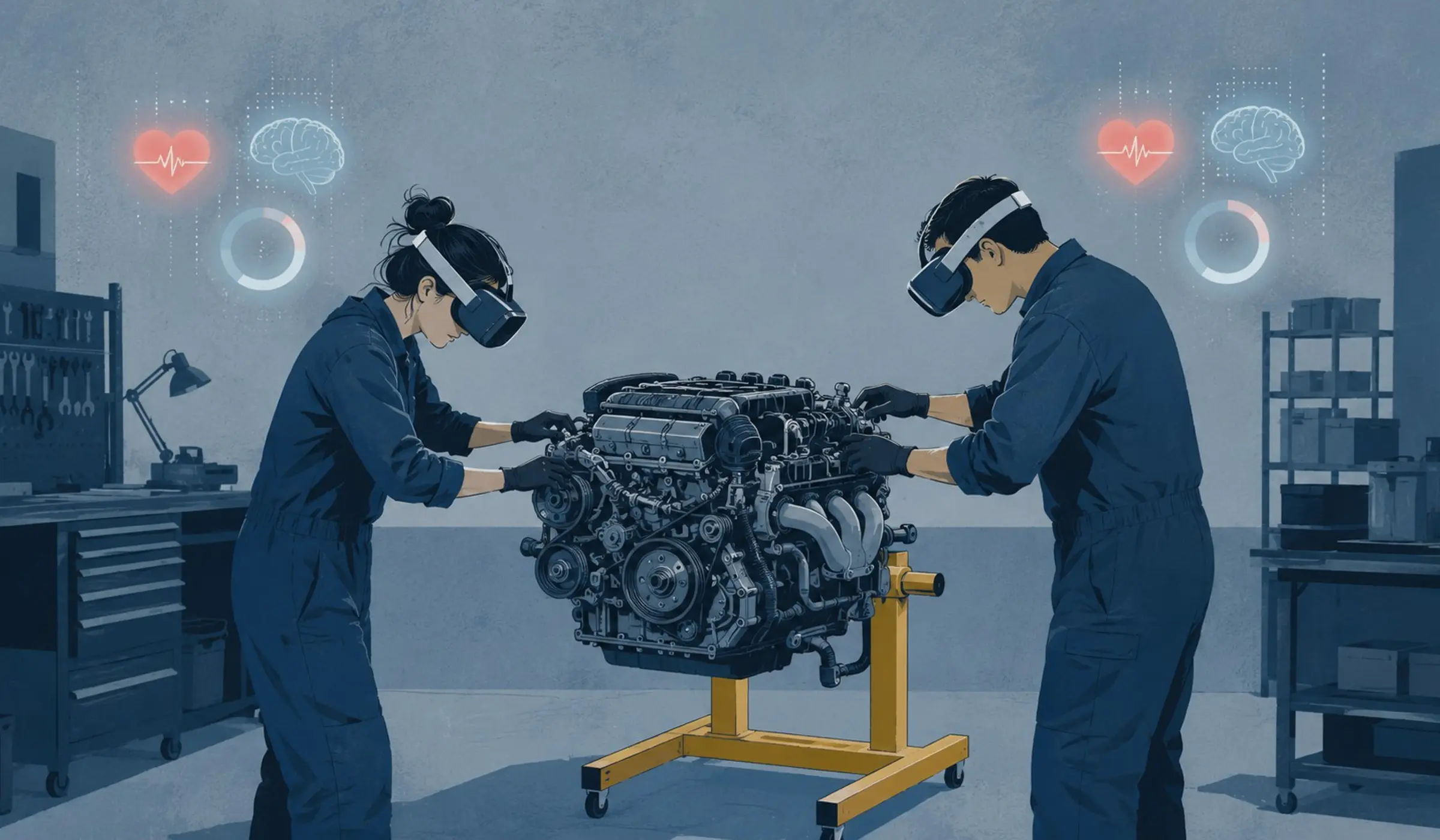
 Three Hypotheses, and Nobody LookedIn 2022 I argued that VR should share heart rate, cognitive load and attention. Two years later we tested it on 28 people, and nobody looked.
 - 02
 A Camera That Watches You BackA VR photo walk where the sky tints red when you get stressed and the companion beside you changes its voice. The world responds instead of reporting.
 - 03
 165 Hours of Feeling SickEvery model for VR motion sickness was trained on under two hours of video. The fix was not a better model, it was patching 100 commercial games.
 - 04
 The Sensor Was Already in the HeadsetThree years of strapping sensors to people, and the signal was in the hand tracking the whole time. How you reach says something about your cognitive load.
 - 05
 So It Knows You Are Struggling. Now What?Three papers in one year on the question this series kept running into: once a system knows you are struggling, what should it actually do about it?
Series · 5 posts · 2022 to 2025
Involuntary Signals
Four years of trying to make headsets read the signals people cannot help sending, and working out what they should do about it.
Start at part 1 → ≈ 40 min total read